Constructing a tennis court is a significant investment that can enhance recreational opportunities, promote community engagement, and even increase property value. However, selecting the appropriate materials for your tennis court installation is a critical decision that directly impacts the durability, playability, and maintenance requirements of the facility. As an expert in tennis court construction and maintenance, I will guide you through the essential considerations to help you choose the right materials for your tennis court.
Understanding Different Types of Tennis Court Surfaces
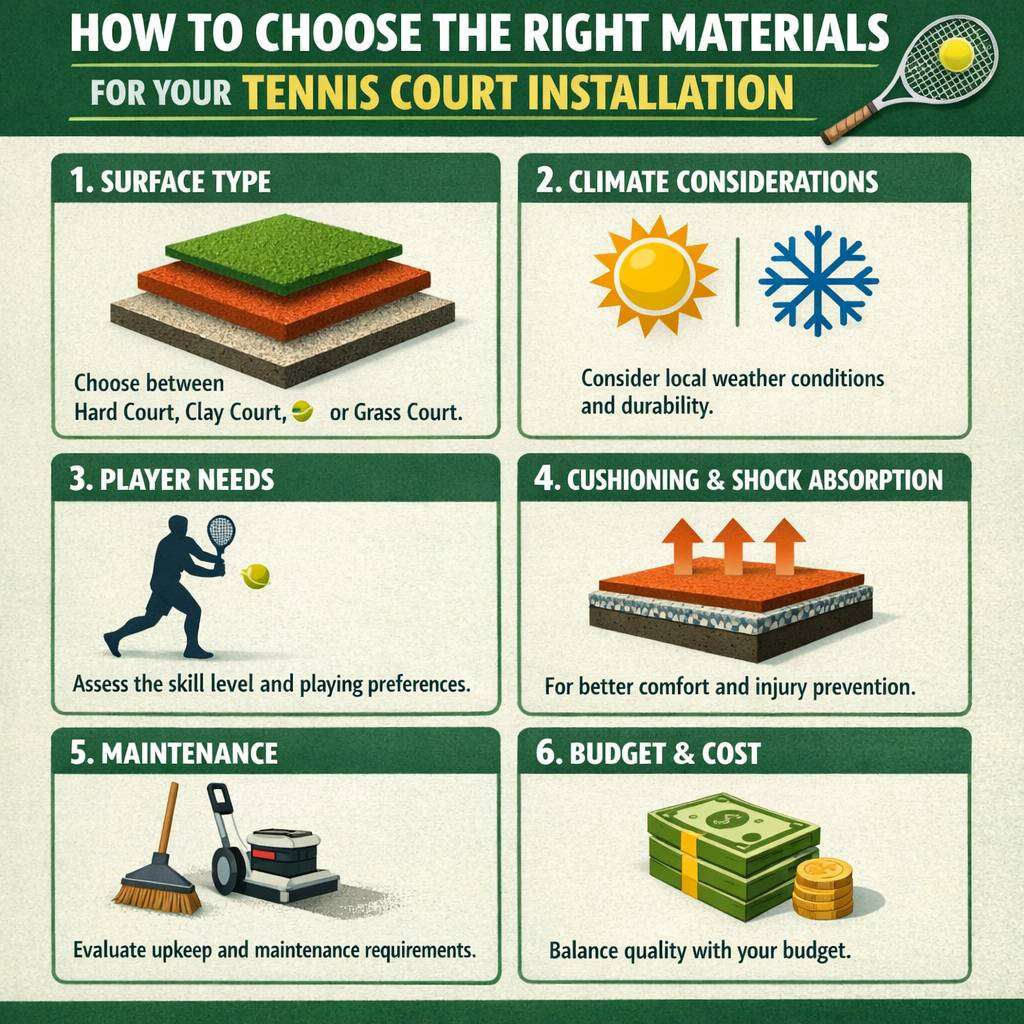
Before diving into material choices, it’s vital to understand the primary types of tennis court surfaces available. The three most common options are:
- Hard courts (e.g., acrylic or polyurethane surfaces)
- Clay courts (including traditional clay and artificial clay)
- Artificial grass tennis courts
Each surface type offers distinct benefits and challenges, and your choice should align with your usage, climate, and maintenance capacity.
Key Factors Influencing Material Selection
When selecting materials, consider the following critical factors:
Playability and Player Performance
Different surfaces influence ball bounce, speed, and player movement. Hard courts generally provide a consistent and fast game, while clay courts slow the play and allow for more sliding, which some players prefer. Artificial grass tennis courts offer a softer feel and a medium pace, making them suitable for recreational play.
Looking to enhance your outdoor space with professional tennis court installation? Visit https://localtenniscourtresurfacing.com/u-s-regions/new-england-northeast/tennis-court-resurfacing-repair-maine/ for expert services in Maine. Our team specializes in creating durable, high-quality courts tailored to your needs, ensuring years of enjoyment. Trust us for a seamless, efficient installation that transforms your property into the perfect tennis oasis.
Climate and Weather Conditions
Your geographic location plays a significant role. For example, hard courts are more resistant to weather variations and require less artificial watering, whereas clay courts may be more susceptible to rain and require excellent drainage solutions. Artificial grass tennis courts tend to be durable across a range of climates but require proper installation and drainage systems.
Maintenance Requirements
Consider your capacity and desire for ongoing tennis court maintenance. Hard courts are relatively low maintenance but may need tennis court cleaning and surface repairs over time. Clay courts demand regular brushing and watering, whereas artificial grass tennis courts require specific tennis grass court maintenance to keep the surface consistent and safe.
Budget and Long-Term Costs
Initial installation costs vary among materials, as do ongoing maintenance expenses. High-quality materials may have higher upfront costs but often prove more cost-effective over time due to durability and reduced repairs.
Looking to upgrade your outdoor space with professional tennis court installation? Expert services ensure perfect surfacing and durable construction for players of all levels. For reliable tennis court installation and resurfacing, visit www.artificialgrassmaintenance.co.uk/tennis-court-installation-resurfacing. Our team provides top-quality craftsmanship, enhancing your recreation area with expertly installed courts that offer excellent gameplay and longevity.
Materials for Tennis Court Surfaces
Acrylic and Resin-based Surfaces (Hard Courts)
Acrylic surfaces are among the most popular for modern tennis courts. These durable and versatile materials provide a smooth, consistent playing surface with excellent surface resilience. Installation involves applying multiple layers of acrylic resins over a concrete or asphalt base, which enhances the surface’s durability.
Pros: Low maintenance, high durability, customisable colours and markings, suitable for all-weather play.
Cons: Surface can become rough over time without proper tennis court resurfacing.
Installing a tennis court is a valuable investment that enhances recreational space and promotes healthy activity. Proper tennis court installation involves careful planning, quality materials, and expert craftsmanship to ensure durability and optimal gameplay. Whether for residential or commercial use, choosing a professional team is essential. For top-notch tennis court installation services, visit https://www.artificialgrassmaintenance.co.uk for reliable solutions and guidance tailored to your needs.
Clay Courts
Traditional clay courts involve a layer of crushed brick, shale, or stone, which provides a slower game with higher bounce. Artificial clay surfaces replicate these properties while offering easier maintenance, as they are less affected by weather than natural clay.
Pros: Excellent for beginner players, softer surface reduces impact injuries, good ball bounce.
Cons: Requires regular tennis court maintenance, including watering, brushing, and resurfacing, to maintain the surface.
Artificial Grass Tennis Courts
Artificial grass tennis courts combine the qualities of natural grass with reduced maintenance needs. Made from synthetic fibres embedded in a cushioned sub-base, these courts provide a realistic playing experience.
Pros: Lower tennis court maintenance than natural grass, consistent playing conditions, suitable for multi-use facilities.
Cons: Installation costs can be high, and the surface may need professional tennis court repairs and resurfacing periodically.
Importance of Proper Sub-base and Drainage Systems
Aside from the surface material itself, the underlying sub-base and drainage system are crucial. A well-constructed sub-base ensures a stable foundation, which is vital for long-term durability and smooth play. Adequate drainage prevents water accumulation, reducing the risks of surface damage and cancelling play after rainfall. Incorporate efficient drainage solutions during tennis court installation to minimise future tennis court repairs and maintenance challenges.
Future-Proofing Through Resurfacing and Maintenance
No matter how high-quality the surface materials, regular tennis court maintenance is essential to preserve the quality of the game and prolong the lifespan of your court. This includes routine cleaning, repairs, and occasional resurfacing.
Tennis court cleaning can remove dirt, algae, and moss, ensuring safer playing conditions. When the surface begins to show signs of wear, tennis court resurfacing is necessary to restore the surface’s integrity, improve playability, and prevent costly repairs. For artificial grass tennis courts, ongoing tennis grass court maintenance involves brushing, infill top-up, and surface inspections.
Conclusion
Choosing the right materials for your tennis court installation requires a careful assessment of your specific needs, budget, and environmental conditions. Whether prioritising low maintenance, optimal play characteristics, or durability, understanding the differences between hard courts, clay courts, and artificial grass tennis courts is fundamental.
Investing in high-quality surfacing materials, coupled with proper sub-base, drainage, and regular tennis court maintenance, will ensure your courts remain in excellent condition for years to come. Engaging experienced professionals for tennis court installation and subsequent tennis court repairs and resurfacing will help you achieve a seamless, high-performance tennis facility tailored to your requirements.
By considering these factors and diligently maintaining your court, you can enjoy a functional, attractive, and enjoyable tennis surface for recreational, competitive, or organisational purposes.