
Maintaining a pristine playing surface is crucial for tennis enthusiasts, and regular tennis court cleaning is essential to ensure optimal performance and safety. Debris, moss, and dirt not only affect gameplay but can also lead to surface damage over time. Professional cleaning services provide expert techniques to rejuvenate your court, enhancing its longevity and appeal. For more information on effective tennis court cleaning options, visit https://dhtennis.net/services/tennis-court-washing/.
Maintaining a tennis court is crucial for both performance and aesthetics, whether it’s made of natural grass, clay, or artificial grass. This guide focusses specifically on the cleaning techniques that will keep your tennis court in top condition, ensuring it’s ready for action at any moment. With proper maintenance, including cleaning, resurfacing, and repairs, your court can provide a perfect playing surface for years to come.
Understanding Tennis Court Materials
Before diving into cleaning techniques, it’s essential to understand the different surfaces available for tennis courts. Artificial grass tennis courts have become increasingly popular due to their low maintenance and durability. These surfaces mimic natural grass while providing consistency in play. The cleaning procedures vary based on the type of material you’re working with, so it’s vital to know what you’re dealing with to apply the correct techniques.
Cleaning Artificial Grass Tennis Courts
Cleaning artificial grass tennis courts involves several strategies to remove debris and keep the surface in pristine condition. Here are some effective tips:
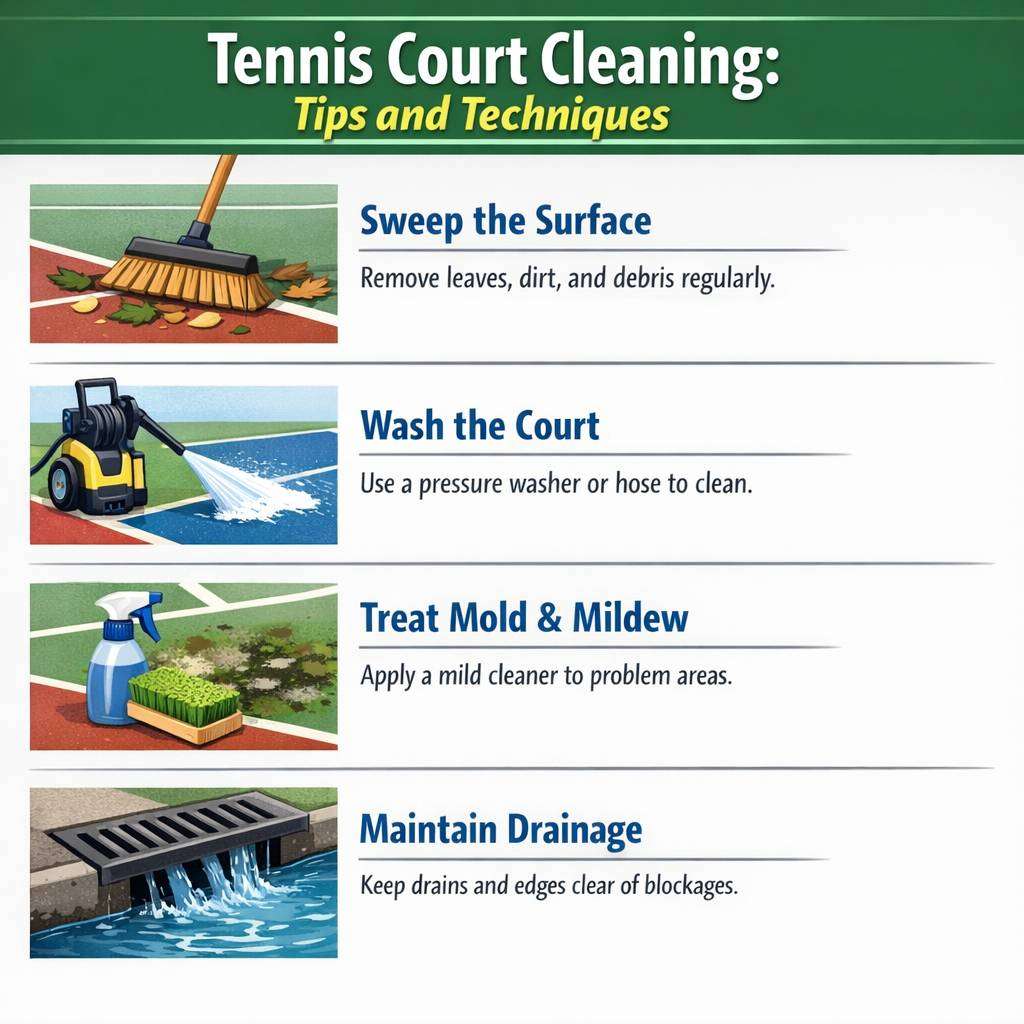
Regular Sweeping: Use a stiff-bristled broom to sweep away leaves, dirt, and other debris. Regular sweeping helps prevent the build-up of material that can inhibit drainage and lead to the growth of moss or algae.
Rinsing: Occasionally, rinse the surface with water to wash away loose debris and prevent the accumulation of dust and grime. It’s best to use a pressure washer set on a low-pressure setting to avoid damaging the fibres.
Using a Leaf Blower: For quick and efficient clearing, a leaf blower can be an effective tool. This method helps to remove debris without causing any harm to the artificial grass surface.
Deep Cleaning: Every 6–12 months, conduct a deep cleaning using a specialised detergent suitable for synthetic fibres. It’s essential to follow the manufacturer’s guidelines to ensure that no harmful chemicals are used that could damage the grass.
Tennis Court Maintenance
Comprehensive maintenance goes beyond just cleaning; it includes regular inspections and repairs. Here are some critical areas to focus on:
Maintaining a pristine tennis court is essential for optimal performance and enjoyment. Regular tennis court cleaning removes debris, moss, and grime, ensuring a safe playing surface. For professional cleaning services, visit https://www.artificialgrassmaintenance.co.uk today!
Inspect for Damage
Regular inspections can help you identify issues early on. Look for:
-
Worn or Thinning Areas: Artificial grass can experience wear and tear in high-traffic zones. These areas may require patching to maintain playing quality.
-
Loose Edges: Check the perimeter of the court for loose edges that need to be reattached securely.
-
Drainage Issues: Ensure that water drains correctly and that there are no ponding areas on the surface. Poor drainage can lead to further deterioration.
Worn or Thinning Areas: Artificial grass can experience wear and tear in high-traffic zones. These areas may require patching to maintain playing quality.
Loose Edges: Check the perimeter of the court for loose edges that need to be reattached securely.
Drainage Issues: Ensure that water drains correctly and that there are no ponding areas on the surface. Poor drainage can lead to further deterioration.
Tennis Court Repairs
When damages are identified, it’s essential to address them promptly to avoid larger problems. Some common repairs include:
-
Patching: For small holes or damaged areas, a patch can be applied using artificial grass sections. Ensure that the new patch is properly secured to maintain a seamless playing surface.
-
Re-turfing: In cases where large areas of the court are damaged, re-turfing may be necessary. This involves removing the damaged sections and replacing them with new grass.
-
Resurfacing: If the court has seen better days, consider tennis court resurfacing to restore its original condition. This process involves applying a new layer over the existing surface, ensuring a fresh and even playing area.
Patching: For small holes or damaged areas, a patch can be applied using artificial grass sections. Ensure that the new patch is properly secured to maintain a seamless playing surface.
Re-turfing: In cases where large areas of the court are damaged, re-turfing may be necessary. This involves removing the damaged sections and replacing them with new grass.
Resurfacing: If the court has seen better days, consider tennis court resurfacing to restore its original condition. This process involves applying a new layer over the existing surface, ensuring a fresh and even playing area.
Tips for Effective Cleaning
A thorough cleaning routine will enhance the longevity of your tennis court. Following these expert tips ensures that your court remains in excellent condition:
Schedule Regular Maintenance
Establish a regular maintenance schedule that includes cleaning, inspections, and repairs. The frequency will depend on the level of usage and exposure to environmental factors such as rain and sunlight.
Use the Right Tools
Invest in the right tools for effective cleaning. A combination of blowers, brooms, and pressure washers will cover all cleaning aspects without causing damage to the court.
Stay Informed About Treatments
Research the latest cleaning treatments suitable for your specific court type. Advances in cleaning technology often introduce more effective and environmentally friendly options that can greatly extend the lifespan of artificial grass tennis courts.
FAQ: Tennis Court Cleaning
What is tennis court cleaning?
Tennis court cleaning refers to the process of maintaining and restoring the playing surface of a tennis court. This involves removing dirt, debris, mold, moss, and other contaminants that can affect playability and safety.
Why is tennis court cleaning important?
Regular cleaning is crucial for several reasons: it enhances player safety by preventing slips and falls, prolongs the life of the court surface by avoiding deterioration caused by buildup of dirt and algae, and improves overall aesthetics for a pleasant playing environment.
How often should I clean my tennis court?
The frequency of tennis court cleaning largely depends on usage and environmental factors. Typically, courts should be cleaned at least once every month during peak seasons. Additional cleanings may be necessary after heavy rain or storms.
What methods are used for tennis court cleaning?
Common methods include:
- Pressure washing: This removes dirt and debris effectively but should be done carefully to avoid damaging the surface.
- Chemical treatments: Specialised cleaners can help eliminate algae or mold.
- Sweeping & blowing: Regularly removing leaves or other debris prevents buildup.
Can I clean my tennis court myself?
While basic maintenance like sweeping can be done by yourself, it’s advisable to hire professionals for deeper cleans. They have specialised equipment and knowledge to ensure your courts are cleaned safely without damage.
What tools do professional cleaners use for tennis courts?
Professional cleaners typically use:
- High-pressure washers
- Soft-bristled brushes
- Leaf blowers
- Specialty cleaners designed for sports surfaces
These tools help in achieving a thorough clean while protecting the integrity of the playing surface.
Are there any risks associated with improper cleaning techniques?
Yes! Incorrect techniques such as using harsh chemicals or high-pressure settings can damage your turf or hardcourt surfaces. It’s essential to follow manufacturer guidelines or consult professionals experienced in sports facility maintenance.
How much does professional tennis court cleaning cost?
Costs vary based on location, type of service needed (e.g., level of cleanliness required), size of the court(s), and geographical area. On average, you might expect to pay between $100-$400 per session. It’s best to get quotes from multiple providers for precise estimates.
Can I prevent my tennis courts from getting dirty again after they’ve been cleaned?
Absolutely! Implementing regular maintenance schedules (like frequent sweeping), covering the courts when not in use with protective tarps during bad weather conditions, minimising foot traffic after rainstorms can all contribute toward keeping your courts cleaner longer.
Engage Professionals if Necessary
While regular maintenance can often be done in-house, consider engaging professionals for deep cleaning and resurfacing. They come equipped with specialised knowledge and tools that can accomplish the job efficiently and without jeopardising your court’s integrity.
Conclusion
Keeping your tennis court clean requires dedication and the right techniques tailored to the material of the court. By implementing regular maintenance, timely repairs, and thorough cleaning practices, you’ll ensure that your artificial grass tennis court remains a top-tier playing surface, ready for serve at a moment’s notice.
For effective tennis court cleaning, it’s essential to maintain the surface regularly to ensure optimal playability. Consider professional services that specialize in maintenance, like those found at artificialgrassmaintenance.co.uk, for exceptional results.