
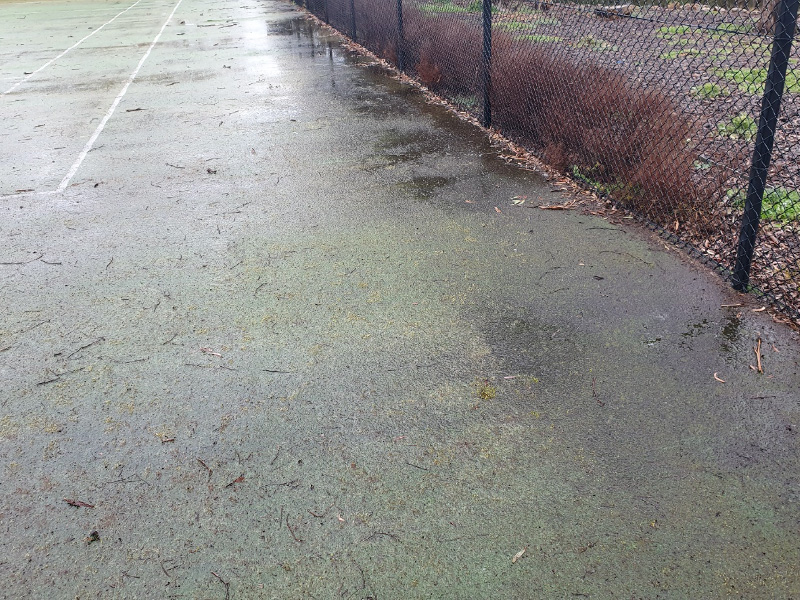
One of the most common and frustrating issues faced by artificial grass tennis court owners is poor drainage, which often leads to puddling or dangerously slippery surfaces. These problems don’t just affect playability—they pose serious safety risks and can shorten the lifespan of the court.
In this post, we’ll explore the root causes of drainage issues, how to fix them, and the steps you can take to prevent them from reoccurring.
Why Drainage Matters on a Tennis Court
Good drainage is critical for any outdoor playing surface. Artificial grass courts are designed with a porous backing and a permeable sub-base, allowing rainwater to pass through the surface and disperse into the ground. When this system fails, standing water begins to accumulate, resulting in the following problems:
- ⚠️ Slippery patches that increase the risk of falls
- 🎾 Disrupted ball bounce and inconsistent play
- 🌿 Increased moss and algae growth due to constant moisture
- ⏳ Accelerated wear and fibre damage from stagnant water
- 💸 Higher maintenance costs due to required repairs and cleaning
Common Causes of Drainage Issues
Understanding what causes drainage problems is the first step to resolving them effectively. The most frequent culprits include:
1. Compacted Infill
Over time, the sand infill can become compacted from foot traffic and weather, reducing its permeability. This prevents water from draining efficiently through the artificial turf’s backing.
2. Organic Debris Build-Up
Leaves, moss, dust, and other organic matter can clog the gaps between the synthetic fibres, forming a mat that blocks drainage. This is particularly problematic in shaded or tree-lined courts.
3. Poor Sub-Base Construction
If the sub-base was not properly installed during the initial construction, it might lack sufficient slope or depth. A well-built base should consist of compacted MOT type 1 aggregate and sharp sand to encourage water dispersion.
4. Blocked Drainage Channels
Some courts feature peripheral or French drains to manage surface water. If these are blocked with mud, roots, or moss, water will back up and sit on the surface.
5. Uneven Surface Levels
Ground movement or wear over time can cause the court to settle unevenly, creating low points where water naturally collects and stagnates.
How to Fix Drainage Problems
Once you’ve identified the source of the problem, it’s time to take action. Here are some proven solutions depending on the cause:
🧹 Deep Cleaning and Debris Removal
For minor drainage issues caused by surface contamination, a deep clean using a power brush and wet-vacuum system may be sufficient. These machines lift the pile, agitate the infill, and extract blocked debris from the surface layer.
🔧 Infill Replacement or Top-Up
If the infill has compacted or washed away, topping it up with clean, kiln-dried silica sand can restore permeability. Ensure the sand is spread evenly and brushed into the turf using a mechanical drag brush.
🛠 Sub-Base Reconstruction
For persistent drainage failures due to a poorly installed base, excavation and reconstruction may be necessary. This is a more invasive solution, but one that can permanently solve the issue.
🧪 Moss and Algae Treatment
If slippery surfaces are caused by moss or algae, apply a sports-surface-safe biocide. Allow the solution to dry fully before brushing the area clean. This should be followed by regular maintenance to prevent regrowth.
🪠 Unblocking Drainage Channels
Inspect any French drains or channel drains around the court. Remove debris manually or flush with water to restore proper flow. A yearly inspection schedule is advisable for high-traffic courts.
Preventing Drainage Issues Long-Term
Prevention is always better than cure. Here are some tips to help you maintain a dry, safe court environment all year round:
- Brush weekly to lift fibres and redistribute infill
- Blow or rake debris after heavy use or storms
- Apply moss treatment twice a year (spring and autumn)
- Inspect drains and edge channels every 3–6 months
- Use perimeter netting or fencing to limit leaf litter
- Schedule annual professional deep cleaning for optimal surface health
When to Call a Professional
If water is consistently pooling in specific areas or if the surface remains slippery despite your best efforts, it’s time to call in a court maintenance specialist. They can conduct a full site inspection, perform porosity tests, and recommend the right combination of treatments or repairs.
Professional services may include power brushing, wet vacuum extraction, sub-base repairs, or infill replacement. While this involves some cost, it can dramatically extend the life of your artificial grass court and improve safety and performance.
Final Thoughts
Drainage problems are more than just a nuisance—they affect player safety, game quality, and long-term durability. By addressing the root cause early and committing to regular maintenance, you can prevent puddling and enjoy a consistently playable court throughout the seasons.
Have you experienced drainage issues on your court? Share your story or ask us a question—we’d love to help.